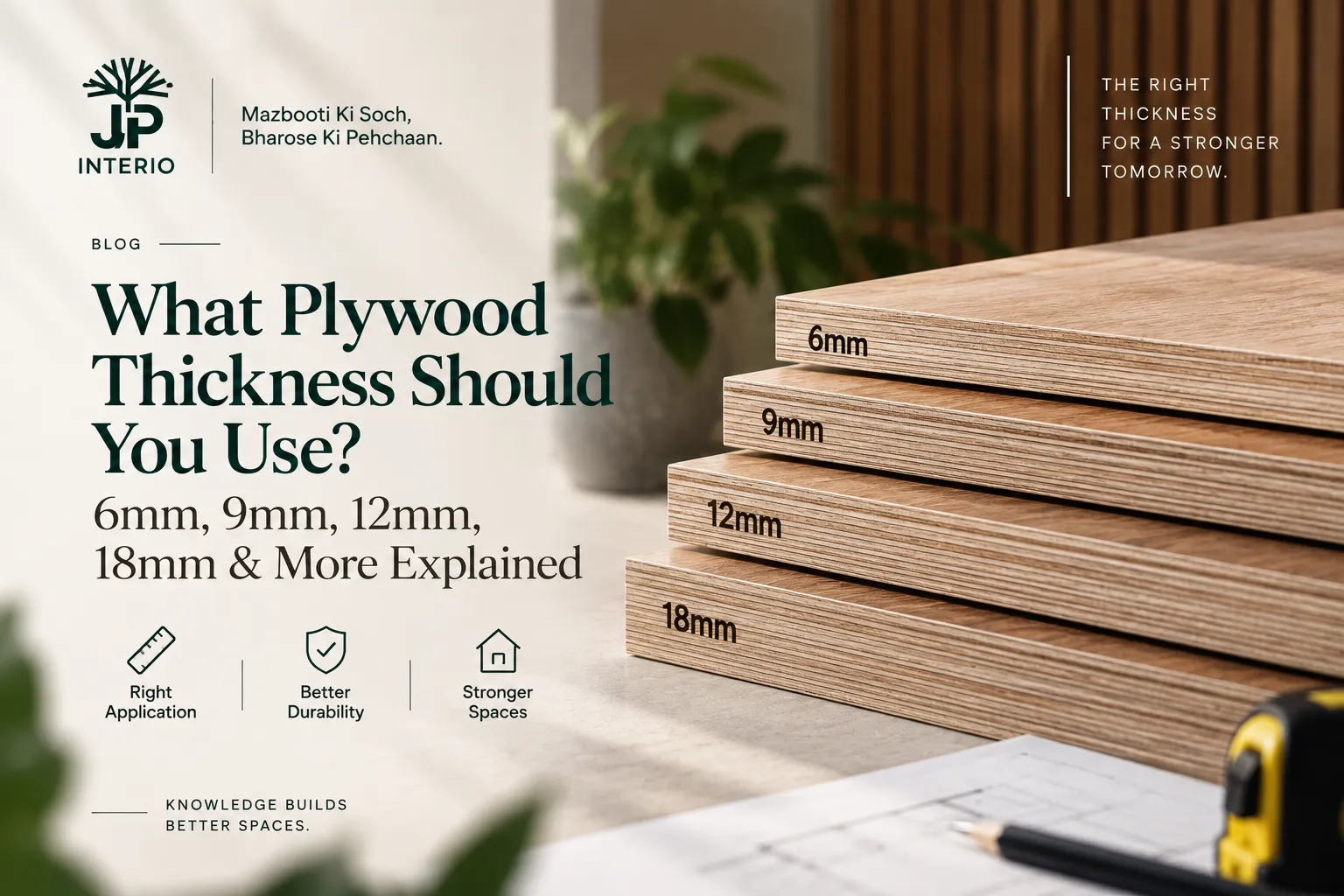
What Plywood Thickness Should You Use? 6mm, 9mm, 12mm, 18mm & 19mm Explained
Introduction
When buying plywood, one of the first questions is: "Which thickness should I buy?"
6 mm? 9 mm? 12 mm? 18 mm? 19 mm?
The answer depends on what you are building. Thickness influences rigidity, load capacity and the way furniture components perform.
Current 2026 plywood guides commonly map thinner sheets to backs and lightweight components and thicker sheets to structural furniture components. (WoodAge)
6mm Plywood
6 mm plywood is commonly used for lightweight applications.
Examples include:
- Cabinet back panels
- Drawer bottoms
- Furniture backs
- Lightweight partitions
- Decorative applications
It is generally not intended to replace a structural 18 mm panel.
9mm Plywood
9 mm plywood sits between lightweight and structural applications.
It can be considered for:
- Light shelves
- Small shutters
- Partitions
- Furniture backs
- Selected internal components
The span and expected load should always be considered.
12mm Plywood
12 mm plywood provides greater rigidity than thinner sheets.
It can be used for:
- Shelves
- Dividers
- Shoe racks
- Light furniture components
- Selected shutters
Again, application determines suitability.
18mm Plywood
18 mm is one of the most commonly specified plywood thicknesses for furniture.
It is frequently used for:
- Wardrobe carcasses
- Kitchen cabinets
- Shelves
- Furniture shutters
- Beds
- Storage units
Current furniture guides commonly identify 18 mm as a standard working thickness for major furniture components. (Gattani Plywood)
19mm Plywood
19 mm plywood may be considered where additional rigidity or load-bearing capacity is required.
It can be useful for:
- Heavy shelves
- Work surfaces
- Tabletops
- High-load furniture
However, thicker does not automatically mean better.
Thickness and Grade Are Different
This is one of the most important things to remember.
Thickness tells you how thick the sheet is.
Grade tells you about its intended moisture resistance.
For example:
18 mm MR ≠ 18 mm BWR ≠ 18 mm BWP
All are 18 mm thick, but they have different moisture-resistance specifications.
How Should You Choose?
Before buying, ask:
- What furniture component am I making?
- How much weight will it carry?
- What is the unsupported span?
- What hardware will be used?
- Will it be exposed to moisture?
Then select the appropriate thickness and grade.
BondSeal 710
JP Interio's BondSeal 710 range can be selected across MR, BWR and BWP grades depending on application.
- MR – 5-year warranty
- BWR – 10-year warranty
- BWP – 15-year warranty
The thickness should be specified separately according to furniture requirements.
Conclusion
There is no universal "best plywood thickness".
6 mm works for certain lightweight applications.
9–12 mm can be useful for intermediate applications.
18 mm is commonly used for major furniture components.
19 mm and thicker panels can be considered for heavier-duty requirements.
The key is to select the right thickness + the right grade + the right application.
FAQs
Is 18 mm plywood good for wardrobes?
Yes. 18 mm is commonly used for major wardrobe components.
Is 12 mm plywood good for shelves?
It can be suitable for selected shelves, depending on span, support and load.
Is 19 mm plywood stronger than 18 mm?
Generally, additional thickness can provide greater rigidity, but the correct thickness depends on the design.