Plywood vs MDF vs Particle Board: Which Should You Choose?
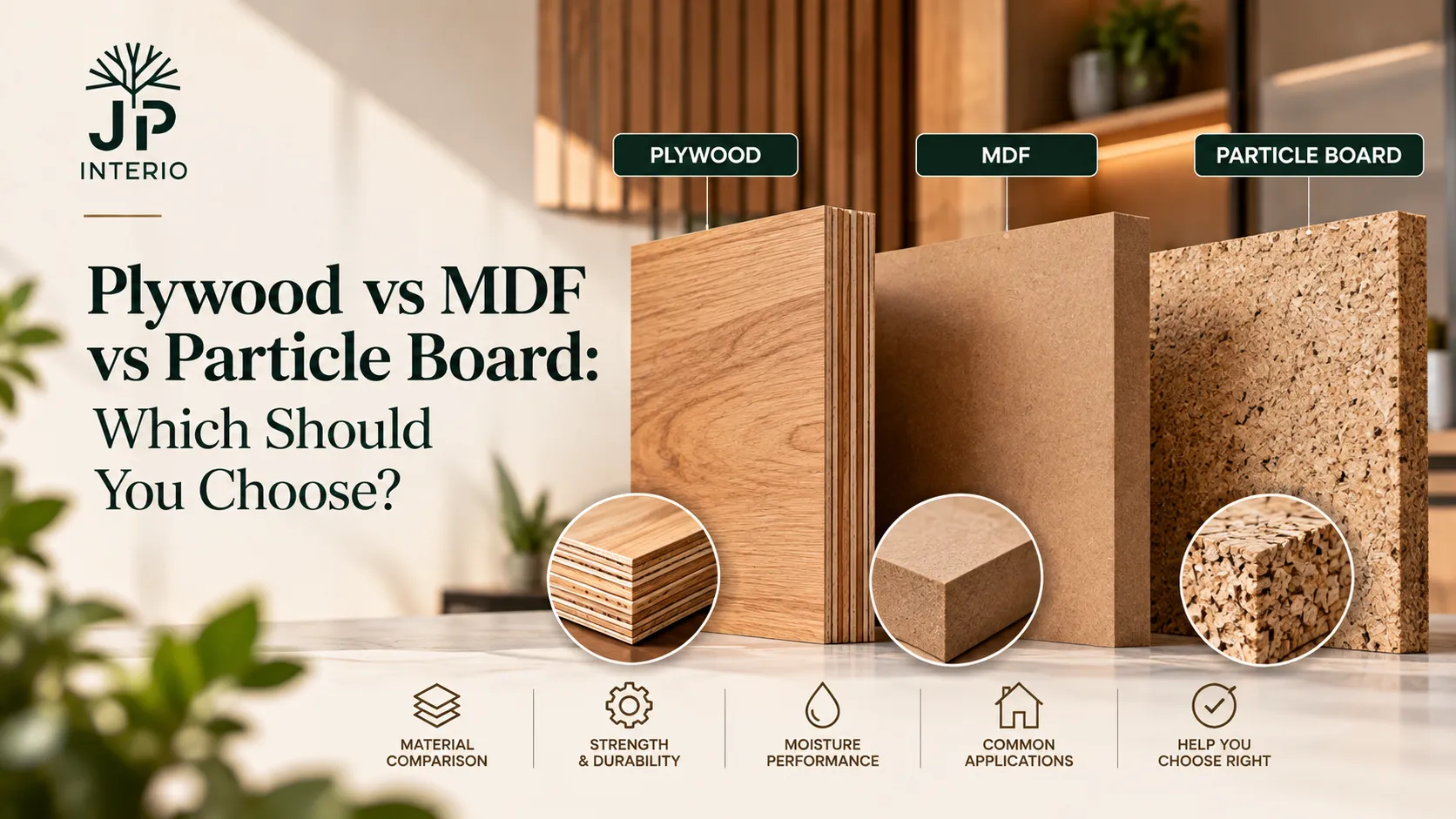
Why This Comparison Matters
When planning furniture or interiors, customers often compare plywood with MDF, particle board and other engineered wood-based materials. Each material is manufactured differently and may be suitable for different applications.
Do Not Start With a Universal Winner
The right choice should begin with the project. Consider the intended use, expected loading, fabrication method, environmental conditions, finish and budget. A material that is appropriate for one application may not be the best fit for another.
Plywood
Plywood is made by bonding layers of wood veneers to form a panel. Its layered construction is one reason it is widely considered for furniture and interior applications. The appropriate plywood specification should still be selected according to the intended use.
MDF and Particle Board
MDF and particle board are also engineered wood-based materials, manufactured using different processes and commonly used in furniture and interiors. Their suitability depends on the application, project specification and desired outcome.
A Better Way to Compare
Instead of asking which material is always better, compare them against the project's actual needs. Consider application, expected use, environment, fabrication, finish, specification, availability and budget.
A knowledgeable dealer or interior professional can help translate these requirements into a practical material decision.
JP Interio's Approach
JP Interio encourages application-led plywood conversations across its dealer and customer network in India. The goal is not to make every project use the same material, but to help stakeholders understand why material selection matters.
When comparing plywood, MDF or particle board, start with the project—not the product category.