MR vs BWR vs BWP Plywood: Which Grade Should You Choose?
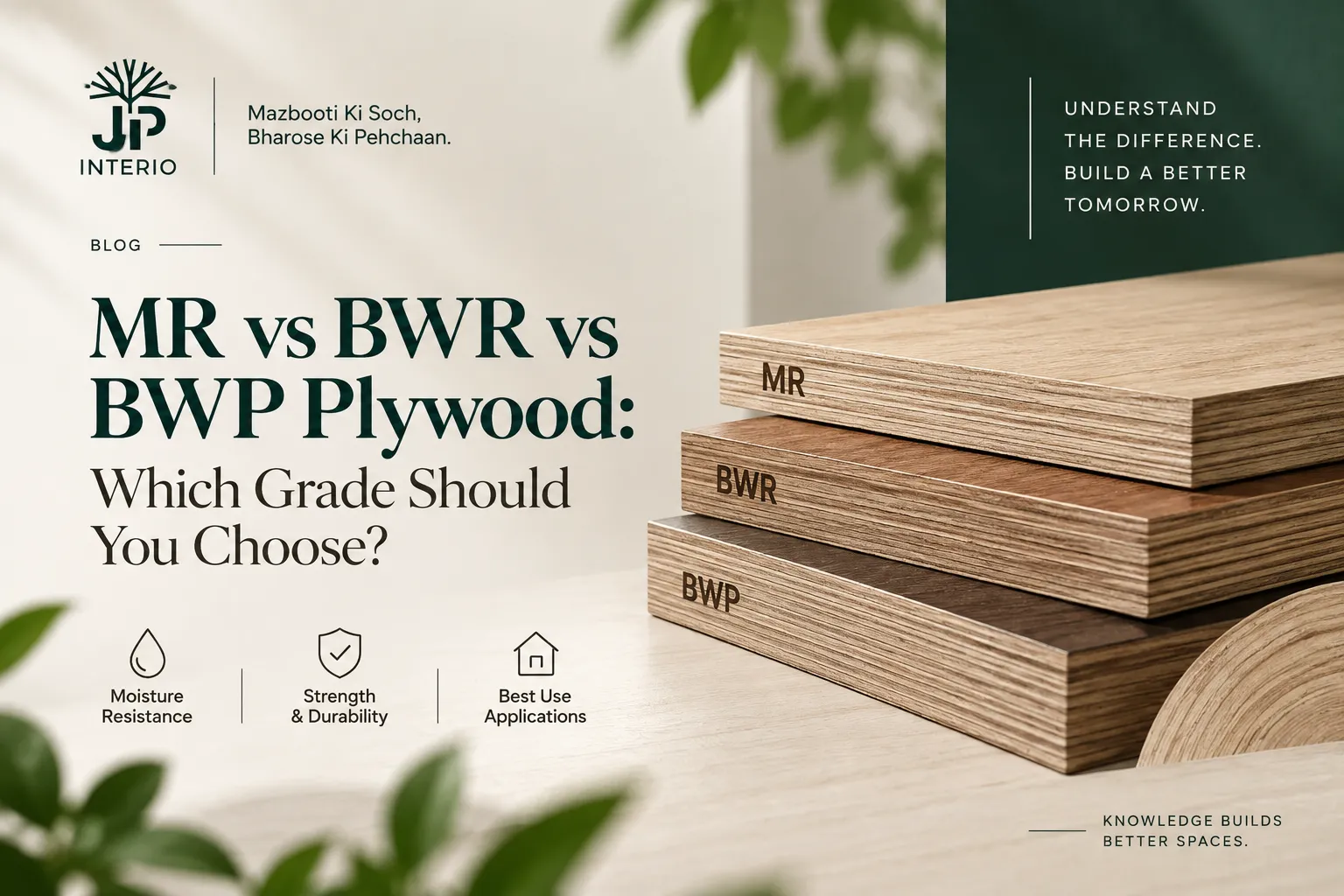
If you have ever visited a plywood dealer, you have probably heard three terms repeatedly: MR, BWR and BWP. But what do they actually mean? And more importantly, which one should you choose?
The grade of plywood should primarily be selected according to the environment in which it will be used. Current Indian plywood guides consistently distinguish MR for dry interiors, BWR for moisture-prone applications and BWP for higher-moisture environments. (EvoSpace)
Let's break it down.
What Is MR Plywood?
MR stands for Moisture Resistant. MR plywood is generally intended for dry interior applications.
Common uses include:
- Bedroom wardrobes
- Beds
- Study tables
- Bookshelves
- TV units
- Living-room furniture
For dry interior furniture, there is often no need to pay for a higher moisture-resistance grade when the environment does not require it.
BondSeal 710 MR comes with a 5-year warranty.
What Is BWR Plywood?
BWR means Boiling Water Resistant. BWR plywood offers higher moisture resistance and is commonly considered for:
- Modular kitchens
- Utility areas
- Damp environments
- Kitchen cabinets
- Furniture exposed to occasional splashes
BondSeal 710 BWR comes with a 10-year warranty.
For many kitchen applications, BWR can provide a practical balance between moisture resistance and cost.
What Is BWP Plywood?
BWP means Boiling Water Proof. BWP plywood is generally used when higher moisture resistance is required.
Potential applications include:
- Bathroom furniture
- Under-sink units
- High-moisture kitchens
- Wet areas
- Certain exterior or semi-exterior applications
BWP is commonly associated with the IS 710 marine plywood category. (EvoSpace)
BondSeal 710 BWP comes with a 15-year warranty.
MR vs BWR vs BWP: Quick Guide
| Application | Suggested Grade |
|---|---|
| Bedroom wardrobe | MR |
| Study table | MR |
| Living-room furniture | MR |
| Kitchen cabinets | BWR |
| Utility area | BWR |
| Bathroom furniture | BWP |
| Under-sink cabinet | BWP |
| High-moisture application | BWP |
This is a practical guide, not a replacement for project-specific specifications.
Does Thickness Decide the Grade?
No. This is an important point.
Thickness and grade are two different specifications.
An 18 mm MR sheet is still MR.
An 18 mm BWR sheet is still BWR.
An 18 mm BWP sheet is still BWP.
Thickness determines factors such as rigidity and structural suitability, while grade relates to moisture resistance.
Which One Should You Buy?
Ask yourself: Where will the plywood be used?
If the answer is a dry bedroom, MR may be sufficient.
If it is a kitchen or utility area, BWR may be appropriate.
If it is a bathroom or high-moisture zone, BWP should be considered.
Conclusion
There is no single plywood grade that is perfect for every application. The right choice depends on the environment.
With BondSeal 710, JP Interio provides:
- MR – 5-year warranty
- BWR – 10-year warranty
- BWP – 15-year warranty
Instead of simply asking, "Which plywood is best?", ask:
"Which plywood grade is best for my application?"
That is the smarter way to buy plywood.
FAQs
Which is better, BWR or BWP?
Neither is universally better. BWP is intended for higher moisture exposure, while BWR can be suitable for many kitchen and utility applications.
Can MR plywood be used for wardrobes?
Yes. MR plywood is commonly used for wardrobes in dry interior environments.
Is BWR waterproof?
BWR provides improved water resistance, but it should not automatically be treated as equivalent to BWP for continuously wet environments.